Digest · Manila Wire
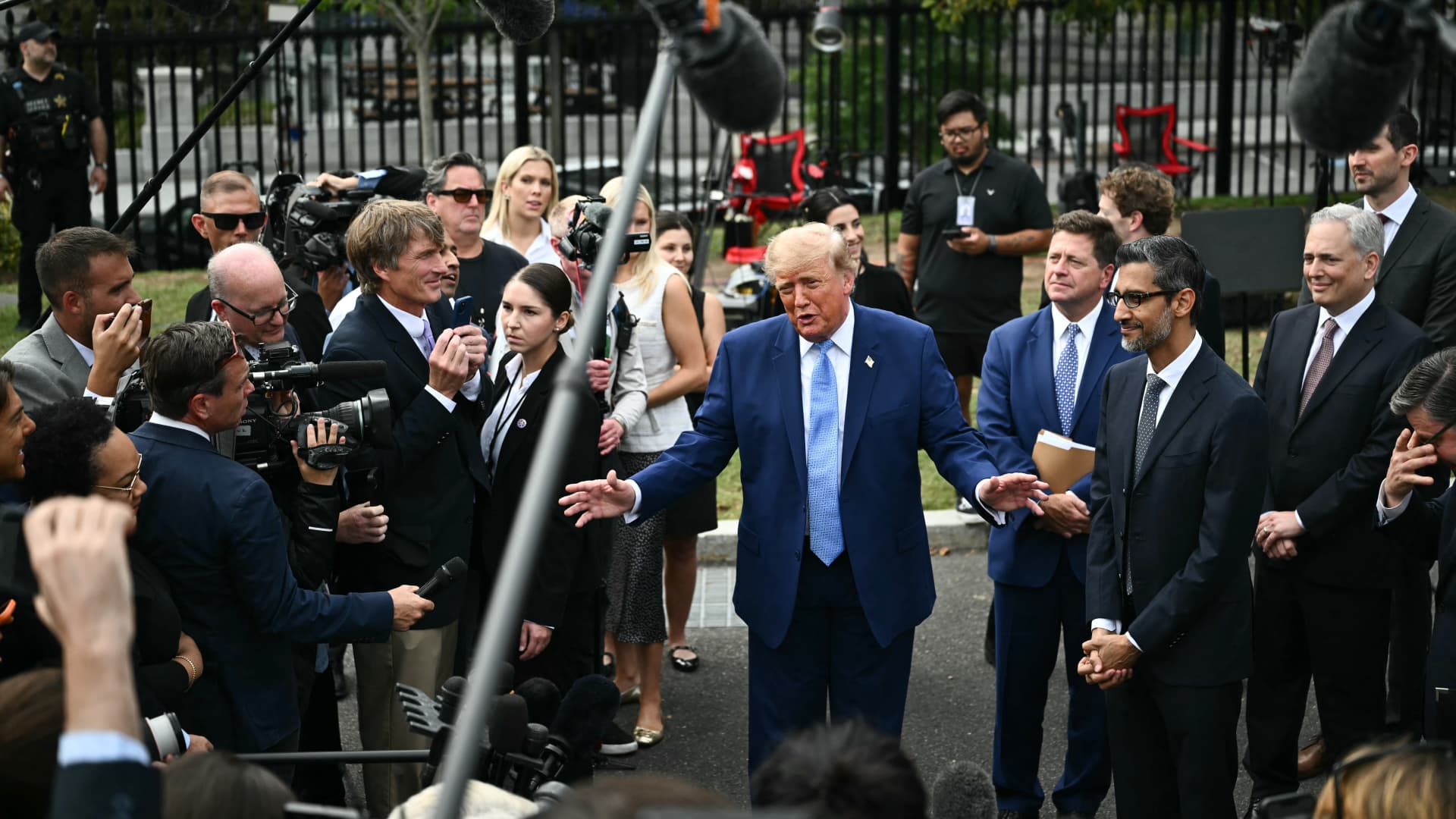
US President Donald Trump speaks to the press after a meeting with technology executives about artificial intelligence at the White House in Washington, DC, on Sept. 29, 2026. Kent Nishimura | Afp | Getty Images Democrats took control of Congress Tuesday night, delivering a stinging rebuke to President Donald Trump and his economic record as voters voiced deep frustration with rising prices, government corruption and the AI data center build-out . The party scored an extraordinary pair of victories in traditionally Republican Texas.
James Talarico defeated Ken Paxton, becoming the first Democrat elected to the U.S. Senate from the state in nearly four decades. Gina Hinojosa defeated three-term Gov.
Greg Abbott, making her the first Democratic governor of Texas since Ann Richards left office in 1995. Texas became the clearest measure of how far the blue wave reached: Democrats swept the state's marquee races in a Republican stronghold long considered beyond their grasp. The victories were part of a broader wave of Democratic gains.
In South Carolina, Democrat Annie Andrews upset Darline Graham in a race Republicans had expected to win. In Ohio, Sherrod Brown defeated Republican Sen. Jon Husted.
Democrats also flipped Senate seats in Iowa and North Carolina and won key races in Georgia and New Hampshire. The results marked a striking collapse for Trump's candidates. Paxton, Graham and Husted were among the president's prominent picks who lost after he made dozens of endorsements.
The election also sharpened the political fight over data centers and artificial intelligence infrastructure . Texas is a major center of planned data-center construction , and Hinojosa campaigned for a pause on new projects until the state adopts tougher rules. Her victory gives Democrats more influence over Texas' approach to the build-out, though the state Legislature remains in Republican hands.
The results also delivered a blow to the tech billionaires and corporate interest groups that poured hundreds of millions of dollars into backing Republican candidates who might be friendly to the massive AI data center projects they hope to build around the country. Elon Musk, the world's richest man and the cycle's largest individual political donor, spent record sums in a failed effort to help Republicans retain power, including in Texas. Musk's spending may have become a liability as voters raised concerns about government corruption and the growing influence of billionaires in exit polls.
Talarico repeatedly attacked Musk on the campaign trail, accusing him of trying to buy "his very own personal United States Senator." "Tonight's results are a wake-up call for corporate special interests and billionaires who have been rigging the economy," said Rep. Chris Pappas, who defeated former Republican Sen. John Sununu to win an open Senate seat in New Hampshire.
The outcome is poised to reshape the technology sector's relationship with Washington. A more adversarial Congress is likely to intensify scrutiny of tech companies and the AI data center build-out. Markets reacted as the scale of Democratic gains became clear: Dow futures fell and S&P 500 futures slipped Tuesday evening.
Economic frustration was also central to Democratic gains. Many voters blamed Trump's tariffs and the war with Iran for worsening their economic situation, while the cost of living remained a persistent strain. Democratic control of both chambers gives the party a powerful check on Trump in the final two years of his term, including the ability to block parts of his agenda and intensify congressional oversight.
The results sent a clear warning: promises to bring down costs did not overcome voters' frustration with prices, corruption and the country's direction. This story is developing. Please check back for updates.
Source: CNBC